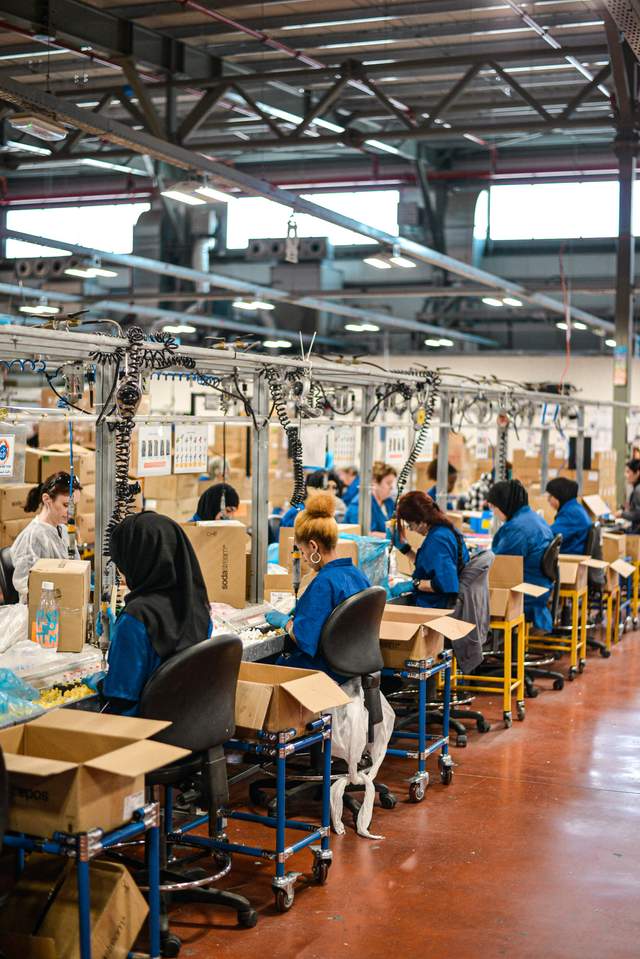
Photo by Remy Gieling on Unsplash
One of the foundational gnawing questions we had when creating Paybeans was how a t-shirt at a department store can be so cheap. There must be some pretty immense ecological and human rights problems hiding behind a $3 garment.
This week in Vox’s podcast segment Today Explained, Terry Nguyen and Helena Shaw talked about the hidden costs to a trend known as fast fashion – the high cost of cheap clothes. Bargain clothing is so simple to obtain and it’s easy for consumers to be blind to the unknown costs. The problem intensifies with the trend of fast fashion because clothing is expendable and quickly cycled – some individuals even dress in the “outfit of the day.”
The economic growth engine encourages companies to sell quick, expendable products as well. Ngyuen cites a book titled Consumed by Aja Barber that claims there are 14 times as many clothes produced as there are humans on the planet (I didn’t catch the unit used, but that might even be an annual sales number).
The podcast sites several unquantified costs at production sites, including dumping grounds of cloth and toxified waterways.
Why don’t consumers make better decisions? Because the system is structured in a way where the consumer bears the burden of informed research. That’s the problem we aspire to solve with Paybeans. The podcasters had a great comment that most consumers don’t have the ability to be that “in the weeds” about hidden information.
Their suggestions were somewhat useful but left me as a listener hoping for more information.
-Try to tailor and mend old clothing
-Purchase vintage and second-hand items
-Don’t buy at all
-If you must buy new, research the supply chain and be critical of the “sustainable” label
Sources
https://podcasts.apple.com/ph/podcast/today-explained/id1346207297?i=1000547241814